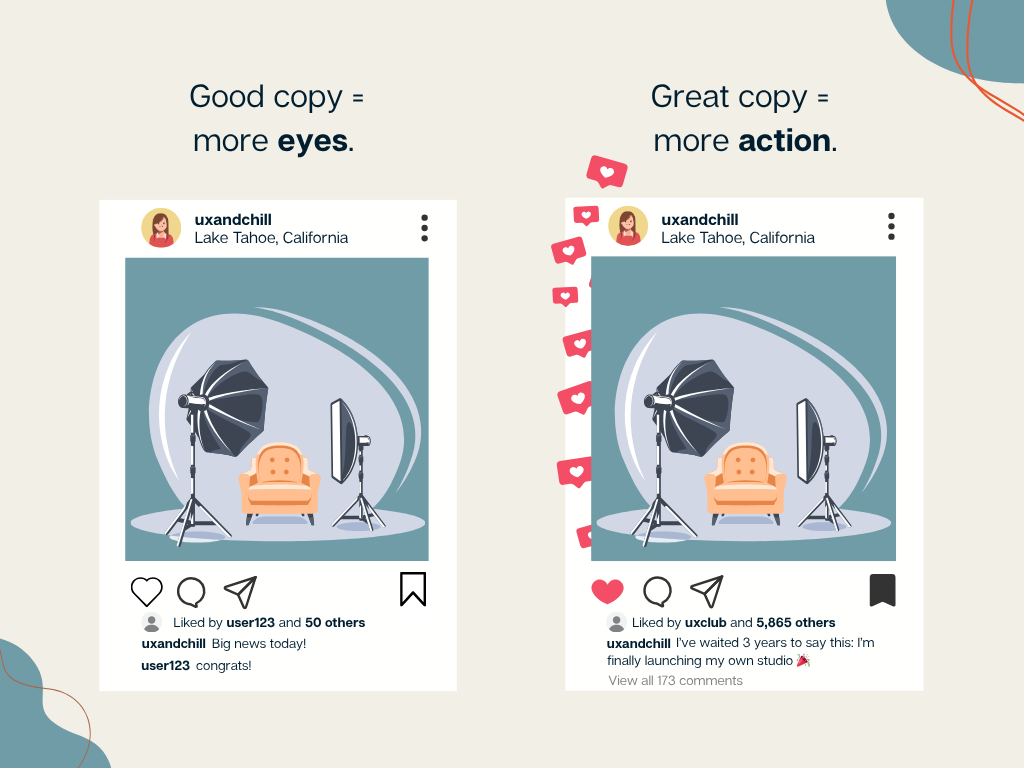
Sure, you could ask ChatGPT or any other AI tool how to write a good caption, and it would give you a pretty solid answer. But…
- Will it be useful? Probably, yes.
- Will it be tailored to your exact use case? Somewhat.
- Will it speak from real-world experience? Nope.
And that’s why this article might be worth a few minutes of your time, because it’s built on hands-on experience from working with influencers, brands, startups, and multinational teams.
Captions are often the most underrated part of a post.
You can have a sleek visual, a strong brand aesthetic, and even some fancy data points. But if your caption is vague, fluffy, or disconnected from your audience, your content will likely underperform.
→ Captions are not decorations. They’re connectors.
My reasons for writing this guide:
In my time managing content for a lifestyle brand that grew from 75k to 110k followers in three months, the biggest performance driver wasn’t just the visual identity; it was caption engagement. Every post was a conversation starter.
- Real experience with measurable growth
→ 35,000 new followers in 3 months through captions alone. - Numbers + storytelling = image
→ I spent hours listening to the brand’s voice before writing a single line. - Lack of honest, tested insights
→ Too many brands copy others and forget to speak in their voice.
Now, I know some of you might say:
“But we already know all this.”
My hot take → If you’re still writing captions like “Crafted for the soul, worn by the bold,” you probably don’t.
Let’s Talk Examples
Take skincare brands, for example. They usually get their visuals spot on with pastel tones, airy photography, and minimal packaging. But their captions are often a buzzword soup.
“Elevate your mood with botanical clarity.”
…What does that even supposed to mean?
Copy like that might sound fancy, but it doesn’t say anything. It doesn’t solve a problem. It doesn’t start a conversation.
“Good visuals make people stop. Good copy makes them stay.”
God bless the soul of whoever said that.
And still, I’ve had people tell me, “Just write something short, nothing too fancy.”
That’s when my copywriter brain short-circuits.
Because a person genuinely interested in what you’re posting will read your caption. The least you can do is make it worth their time. If your caption doesn’t offer any value, chances are your audience will look for their answers in the comments, and that’s often where confusion and misinformation start to spread.
Essential steps for a great caption
Let’s build a great caption together.
You’ve got your content ready (images, links, info); now it’s time to write the caption. For a lot of people I know, this is the hardest part. The white, blank screen can feel scary, like it’s daring you to mess up. But don’t worry, I’ve got a step-by-step approach to help you ease into it and build a caption that actually says something.
Step 1: Start with a Hook They’ll Actually Care About
You want your reader to pause, relate, and think, “this post is for me.”
Whether it’s a question, stat, or spicy opinion → choose an opener that fits your tone.
Let’s say you’re writing about a new Vitamin C serum. Here are some ways to begin:
- Question: “Why is everyone suddenly obsessed with Vitamin C serums?”
- Stat: “Over 50,000 women use Vitamin C serums every single day.”
- Hot Take: “Vitamin C serum is the most overhyped skincare product,” say those who use it wrong and still expect it to fix everything.
There’s no cookie-cutter approach to this. These are just some prompts to spark ideas. Once your message is clear, finding the right tone becomes a lot easier.
Step 2: Deliver Your Key Message Clearly
Now that you’ve got their attention, what do you actually want to say?
Break your message down into simple, helpful steps. Stay focused and avoid the trap of trying to say everything at once (which ends up saying everything but also nothing).
Want to tell a story? Use your own experience; that’s honestly the best way.
For example:
- “I used to apply Vitamin C serum right after cleansing on damp skin but turns out that was why my skin was getting irritated.”
- “I was using Vitamin C regularly but skipping sunscreen. I had no idea I was making my skin more sensitive to the sun.”
Or go the affirmative + advice route:
- “People have been asking what’s behind my skin glow lately, and yes, I’ve been holding back. The answer: Vitamin C serum. But here’s how I actually use it for results…”
Now, share which product and what makes it worth talking about.
Is it fast-absorbing? Non-greasy and budget-friendly?
Whatever makes it stand out → say that.
Step 3: Close with Confidence and Connection
Wrap it up with a reassuring reminder that good skincare takes time, consistency, and the right approach, not just what’s trendy.
Try something like:
- “Healthy, glowing skin is not about quick fixes. It’s about using the right products the right way, and giving your skin the consistency it deserves.”
And don’t forget your CTA:
- “If you’re unsure where to start, I’ve got you. Let’s build a routine that works for your skin, not just your feed.”
Step 4: EDIT.
Once you’ve written your caption, take a nap. Then come back and re-read it with fresh eyes. Chances are, you’ll find areas to tweak, tighten, or delete.
You know that “Was I really talking to her about gas?” kind of moment? Exactly.

This is also where AI can help — but only after you’ve drafted something. Don’t let AI write the whole thing, or you’ll end up with captions like:
“Elevate your routine with botanical clarity 🍃✨” (No offense, but… yawn.)
Pro tip: Run it by a brutally honest friend or cousin. Their feedback might just spark a better idea or save you from cringing.
Final Takeaway
So, friends, use your captions wisely; don’t just treat them like a space for #hashtags and @mentions.
Your caption is not just filler. It’s your pitch. If someone is taking the time to read it, chances are they’re already halfway convinced. A strong caption is not about using a bunch of AI tools or trying to sound like someone else you are not. It works best when it feels real, relatable, and rooted in your own voice, especially when it includes everyday moments or thoughts others can see themselves in.
Create something people want to share, tag their friends in, or save for later, because it spoke to them. Remember: the best platforms grow when people feel that they are gaining something valuable – be it knowledge, connection, or simply feeling seen.
So don’t throw your caption away. Use it with intention. That’s where your story begins and where your audience starts saying yes.